0%

Choosing a colored contact lenses supplier in 2026 takes more than comparing shades and prices. The right partner should provide clear product information, consistent quality records, and responsive support. Ask how lenses are inspected, packaged, and traced by batch. Check that product descriptions explain materials, dimensions, care instructions, and intended use. Details matter.

A polished website is not proof of reliable quality. Request current documentation, examine sample packaging, and clarify how the supplier handles defects, returns, and delivery delays. For lenses worn on the eyes, comfort and fit are personal; attractive photographs cannot confirm either. Wearers should seek advice from a qualified eye-care professional before choosing lenses, especially if they have existing eye concerns. This guide outlines practical questions for assessing suppliers, from communication and quality controls to ordering terms and after-sales service. No checklist can guarantee a perfect partnership. But careful comparisons can reveal gaps before they become costly problems. A few extra questions may feel tedious. They are usually worth asking.
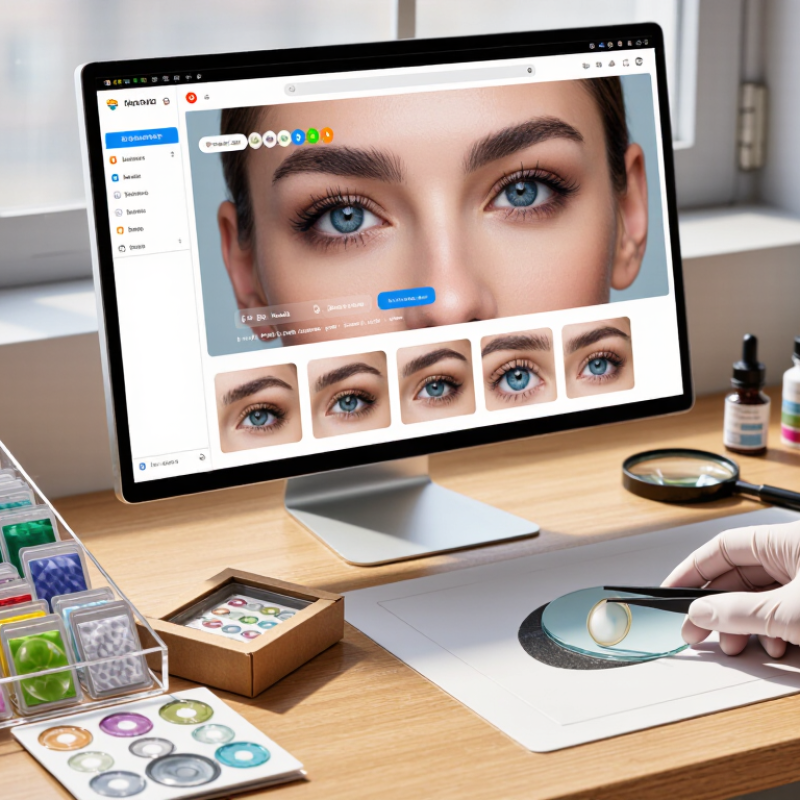
How to Choose a Colored Contact Lenses Supplier in 2026?

Identify the Supplier Type and Product Range

Start by identifying what kind of supplier you need: a manufacturer, an authorized distributor, or a private-label partner. Each offers different levels of control, traceability, and product customization. A manufacturer may provide technical specifications and production details directly. A distributor may offer mixed brands and lower trial quantities. Private-label arrangements can support a distinct collection, but require careful review of quality documents and sample consistency. The right fit depends on your sales channel and service capacity.

Check the range beyond color names. Compare daily and reusable options, prescription powers, base curves, diameters, and color patterns on light and dark eyes. Ask for samples in several shades, then inspect print alignment, edge finish, packaging, and comfort feedback. Small details matter. A wide catalog can still have gaps in common prescriptions or replacement stock.

Demand context helps frame the conversation. The CDC’s 2015 MMWR report estimated that 40.9 million U.S. adults wore contact lenses, based on 2014 survey data. That figure covers all contact lenses, not colored lenses alone, so avoid treating it as a direct market-size estimate. Ask suppliers for current availability, documented quality controls, and realistic replenishment times. A sample may look excellent under bright showroom lighting, yet differ in ordinary indoor light. That is worth checking twice.

Check Safety Standards and Regulatory Compliance

A colored contact lens supplier should provide clear, verifiable evidence of safety compliance—not just a polished certificate. Ask which regulations and product standards apply in your target market, then check whether the documents cover the exact lens models, materials, and manufacturing site you plan to buy from. Certificates can have limited scopes or expired dates. Verify them with the issuing organization when possible.

Look closely at labeling and traceability. Each package should identify the lens parameters, lot number, care instructions, and relevant warnings in language customers can understand. Request records for sterilization, quality checks, and how complaints or adverse events are handled. A supplier that can trace a specific lot quickly is better prepared to investigate a problem. Paperwork matters.

If you visit a facility, notice how staff store materials and separate production steps. Ask how they control contamination and document changes to lens design or packaging. These details may seem small, but they reveal whether procedures are practiced or merely written down. I would not treat one audit report as proof of ongoing quality; records need regular review. Some documents are difficult to interpret, and that deserves follow-up rather than guesswork.

How to Choose a Colored Contact Lens Supplier in 2026: Safety & Regulatory Checks

Use this checklist to compare the evidence a supplier can provide. Bar values count the specific checks listed in each category; they are not compliance scores or market statistics.

Ask for applicable market authorization, manufacturer and distribution-chain details, quality-system evidence, product safety documentation, compliant labeling, traceability, and complaint or recall procedures. Requirements vary by product and jurisdiction. In the U.S., contact lenses are regulated as medical devices and require a prescription. See the FDA contact lens guidance and ISO 13485.

Assess Manufacturing Quality and Product Traceability

When evaluating a colored contact lens supplier in 2026, ask how each production lot is controlled—not just whether the factory holds a quality certificate. Request the certificate’s scope, issuing body, expiry date, and manufacturing-site details. ISO 13485 alignment is useful, but a certificate alone does not prove that every batch meets its specifications. Ask for batch-release records covering lens dimensions, color consistency, packaging integrity, and microbiological testing.

Traceability should work both ways. Check the lot. The supplier should be able to link a finished lens to its raw materials, production date, inspection results, and distribution records. Ask them to demonstrate a mock recall: how quickly can they identify affected lots and customers? Also review how they document complaints and manufacturing changes. A changed pigment source, for example, should trigger documented assessment rather than an informal email.

The CDC’s 2014 MMWR report estimated nearly one million outpatient and emergency visits for microbial keratitis annually in the United States, with direct costs near $175 million, using 2010 data. Those figures concern keratitis overall, not supplier-caused cases; still, they show why consistent controls matter. A reliable supplier should provide current, lot-specific records and explain gaps plainly. If documents arrive late or lot numbers do not match cartons, pause and investigate. That part is easy to overlook.

Compare Customization, Pricing, and Supply Capacity

A colored contact lens supplier should be assessed on customization, pricing, and reliable production capacity—not just a glossy sample. Grand View Research’s Contact Lenses Market Size report estimated the global contact lens market at USD 18.6 billion in 2023, with projected growth through 2030. This covers all contact lenses, not colored lenses alone, so treat it as market context rather than a demand forecast. Ask suppliers for shade options, printed sample batches, material specifications, and documented quality checks. A color that looks vivid under studio lights may appear dull in ordinary indoor lighting.

Compare quotes using the same lens parameters and order quantity. Check whether setup fees, packaging, sample costs, and shipping are included. Ask how pricing changes across small trial runs and repeat orders; the lowest unit price may hide costly minimums. Request a written breakdown. Keep one physical reference sample for color matching, because descriptions like “soft hazel” are subjective.

Capacity needs proof. Request typical lead times, monthly output ranges, and a plan for delays or rejected batches. Confirm how the supplier tracks lot numbers and handles quality complaints. The World Health Organization’s 2023 World Report on Vision estimates that at least 2.2 billion people have near or distance vision impairment; it does not measure colored-lens demand, but it underscores why eye-care products need dependable quality systems. A spreadsheet can look reassuring. It can still miss a late shipment or inconsistent shade, so test a modest order before scaling.

Verify Samples, Communication, and Long-Term Reliability

A supplier’s promises matter less than the pair you can inspect. Request production-matched samples in every planned shade, power, and base curve. Check tint consistency against a white card, inspect edges under magnification, and record feedback during a wear assessment guided by an eye-care professional. Small tests matter. Ask for lot-level records, material specifications, sterilization evidence, and packaging checks—not just an attractive sample without batch traceability. A tidy sample room can still conceal inconsistent production.

Communication is part of quality control. Send the same technical question to sales and quality teams; compare accuracy, not speed alone. A 2017 CDC MMWR survey found that 85–87% of contact lens wearers reported at least one risky behavior. Clear instructions and responsive after-sales support are practical safeguards, not extras. Ask how complaints are logged, investigated, and resolved. Request anonymized examples or corrective-action timelines. Date specifications, agree on change notifications, and schedule periodic sample comparisons. One awkward question is worth asking: what happens when the next batch differs? A reliable supplier gives a specific answer, shares records, and stays responsive after the purchase order is signed.

FAQS

Which type of supplier should I consider?

Manufacturers may provide production details and technical specifications. Distributors can offer mixed ranges and smaller trial quantities. Private-label partners allow more customization, but sample consistency needs close review.

What should I compare across colored lens samples?

Check prescription powers, base curves, diameters, and shade patterns on light and dark eyes. Inspect print alignment, edge finish, packaging, and comfort feedback. Small details matter.

How can I verify a supplier’s safety documents?

Confirm that documents cover the exact lens models, materials, and production site. Check dates and scope, and verify certificates with the issuing organization when possible. Don’t guess.

What details should each package show?

Look for lens parameters, a lot number, care instructions, and clear warnings. Ask how the supplier tracks batches and handles complaints. Traceability matters.

How should I compare supplier quotes?

Compare identical lens specifications and order quantities. Check setup fees, samples, packaging, and shipping. Request a written price breakdown; the lowest unit price may hide expensive minimums.

How can I assess color consistency?

Ask for printed samples in several shades and keep one physical sample as a reference. Studio lighting can make a shade look vivid. Ordinary indoor light may tell a different story.

What evidence shows a supplier can meet demand?

Request typical lead times, monthly output ranges, and a plan for delays or rejected batches. Test a modest order before scaling. A spreadsheet can miss a late shipment.

Are market reports useful for estimating colored lens demand?

They offer context, but figures for all contact lenses do not measure colored lens demand directly. I might still overread those numbers. Current availability and replenishment times are more practical checks.

Conclusion

Choosing a colored contact lenses supplier in 2026 requires more than comparing product catalogs. Start by identifying the supplier’s role and checking whether its product range matches your needs, including available colors, lens designs, and order volumes. Review its safety documentation and applicable regulatory compliance, then ask how it maintains manufacturing quality and tracks products from production through delivery. Clear records and consistent quality controls can help you assess whether the supplier takes product safety seriously.

Next, compare customization options, pricing, minimum order quantities, and the supplier’s ability to meet your expected demand. Request samples when possible and evaluate their quality, packaging, and consistency before making a larger commitment. Pay attention to how promptly and clearly the supplier communicates, especially when answering questions or resolving concerns. A dependable partnership is built on transparent terms, realistic delivery expectations, and reliable support over time—not price alone.

Emily

Emily

Emily is a professional marketing specialist with a deep understanding of the company’s products, services, and the needs they are designed to meet. She combines product knowledge with a clear, customer-focused approach, helping readers understand how the company’s offerings can support their goals......